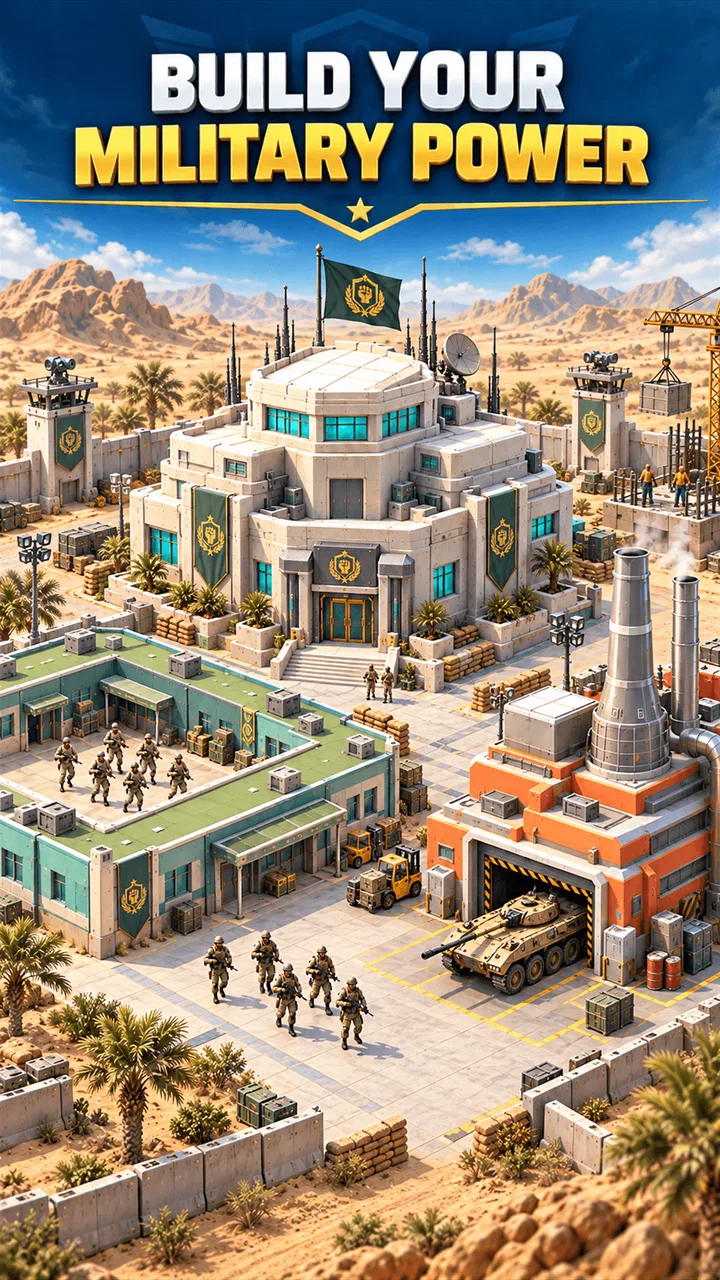
War Master : Strategy Battle
- 4.7
- Rating
- 1.00M
- Installs
- Free
- Price

 Analysis by App-foxy
War Master: Strategy Battle is a free strategy game from Nese DiJiTal that puts one idea at the center of the experience: combining units, developing an army, and making battle decisions in the right order. I found that this focus gives the game a more active feel than a simple tap-to-attack title. You are not only watching a fight unfold; you are deciding how to turn a limited collection of troops into something capable of winning the next encounter.
That sounds straightforward, but the appeal comes from the small decisions between battles. A stronger unit is useful, yet merging too quickly can leave your army short on variety. Training troops improves your options, but it also encourages you to think about what kind of force you are building rather than spending every resource immediately. The most important skill is managing improvement without sacrificing flexibility.
After spending time with it, I see War Master as a good fit for players who enjoy short strategic choices and gradual army growth. It is less suitable for someone looking for a deep, historically detailed war simulator or a purely reflex-based action game. Its strengths are concentrated in the merge-and-build loop, so your enjoyment depends heavily on whether that kind of progression feels satisfying to you.
You May Also Like

 Blood Strike: 2.5 Anniversary
Blood Strike’s Loadouts Turn Every Drop Into a Tactical Gamble
A close look at Blood Strike’s custom loadouts: how fast access to signature weapons reshapes its battle royale rhythm, rewards preparation, and narrows the gap between fights.

 Pandora - Music & Podcasts
Pandora’s Music Is Easy to Start, but Harder to Recover
Pandora’s strength is its low-effort path from a seed to a station. Its weak spot is how much confidence it asks you to place in connection, setup, and quiet recovery.

 8 Ball Pool
 Is Built on Rivalries, Rematches, and Routine
A close look at the rivalries, rematches, shared routines, and unanswered safety questions that turn a quick pool match into a persistent mobile community.

 Samsung Music
’s Quiet Strength Is Playing What You Already Own
Its reach comes less from spectacle than from dependable access to a personal library. That simplicity is both the app’s strongest retention engine and its ceiling.

 AccuWeather: Weather Radar
AccuWeather Review: A Quick, Clear Forecast for Everyday Decisions
For everyday plans, the best forecast is the one you can understand quickly. AccuWeather makes rain timing, radar, and local conditions easy to act on, with a few trade-offs.

 Hill Climb Racing
Why Hill Climb Racing Still Turns Crashes Into One More Run
A tiny car, a bumpy hill and one more upgrade: Hill Climb Racing keeps resurfacing because its simple chaos makes every near-miss feel personal.
More From Our News Desk



Why merging troops matters more than simply collecting them
The defining capability here is the way troop development connects directly to battle preparation. In many mobile strategy games, collecting more units can feel like filling a catalogue. War Master makes the process feel more purposeful because the army you assemble is also the tool you use to approach the next fight. Every improvement has a practical question attached to it: do I strengthen what I already have, or do I preserve room for a broader force?
I liked this because it gives the preparation screen real importance. It is tempting to treat merging as an automatic upgrade button, especially when the game presents a clear path toward a more powerful troop. However, the better decision is not always the most obvious one. A higher-level unit may offer more strength in a direct confrontation, while keeping several developing troops can give you more options when the battle demands a different arrangement.
This creates a useful tension between short-term power and long-term planning. If I merged everything as soon as possible, I could make the current army look stronger, but I also reduced the number of pieces available for future development. If I held back too much, I risked entering a battle without enough immediate force. That balance is what makes the central mechanic more interesting than a standard upgrade sequence.
The game’s store summary describes a combination of merging, building, training, and going to war with strategy. In practice, I found that these actions work best when treated as one connected routine rather than separate menus. Merging changes the quality of the army, training supports its readiness, and battle results determine whether the next round of preparation feels comfortable or pressured.
How the progression feels during ordinary play
The loop is easy to understand. I prepare troops, improve them, enter a battle, and then use the result to shape the next army. That accessibility is important because a strategy game can lose its appeal when the player spends more time learning menus than making decisions. War Master keeps the basic purpose clear, which makes it approachable even if you do not normally play complex strategy titles.
At the same time, the simplicity means that the game does not offer the same kind of depth as a large-scale strategy alternative with diplomacy, a world map, research trees, or detailed logistics. I would not install this expecting a miniature version of a desktop war game. Its strategy is concentrated into troop development and battle choices, and that narrower scope is both its identity and its main limitation.
One practical habit helped me get more from the system: I stopped treating every available troop as material for the next merge. Instead, I looked at the army as a set of future choices. Before combining units, I considered whether the immediate improvement would solve a current weakness or simply make the progression bar look more attractive. That small change made my decisions feel less automatic.
Another useful approach is to separate preparation into two questions. First, what can I improve right now? Second, what might I need to keep available after that improvement? This prevents the common mistake of spending all your development potential on one obvious upgrade. It also makes losses or difficult encounters easier to understand, because you can identify whether the problem came from insufficient strength or from an army that had become too narrow.
A realistic everyday session
War Master works well in a short break when I want something more engaging than a passive idle game. Imagine opening it during a commute or while waiting for an appointment. I can review the troops that are ready to be combined, decide whether to strengthen an existing line, and enter a battle without needing to remember a complicated control scheme. The session has a clear beginning and end: prepare, fight, assess the result, and stop when the next decision can wait.
That structure also makes it suitable for players who do not want to dedicate a long uninterrupted evening to a strategy game. The decisions are compact, but they are not completely empty. A few minutes can still contain a meaningful choice about whether to build immediate power or preserve development options. In my experience, that is where the game is most comfortable: as a focused mobile strategy session rather than an all-day command simulation.
For a player who enjoys experimenting, I would recommend making one deliberate change at a time. Improve a troop group, observe how that affects the following encounter, and then adjust the next preparation cycle. Changing everything simultaneously makes it difficult to understand what helped. This method turns the game into a small personal strategy exercise instead of a sequence of unexplained wins and losses.
Where the game is strongest
The best scenario for War Master is a player who likes visible progress but still wants some responsibility for that progress. The merging system gives a satisfying sense of development, while the battle layer gives those improvements a reason to exist. If you enjoy watching an army become more capable and making choices about when to commit resources, the game’s central loop should feel natural.
It is also a good option for someone moving from casual puzzle games toward strategy. The merge mechanic offers an immediately understandable entry point, while the battle preparation encourages more thought than simply matching pieces for points. You can begin with the obvious decisions and gradually become more deliberate about timing, composition, and resource use.
I would especially suggest it to players who prefer direct control over a small army rather than managing a huge empire. The compact scale keeps the attention on the troops in front of you. You are not required to follow a long political story or maintain a sprawling network of systems before reaching the next tactical decision.
The game is rated for Everyone, which matches its accessible presentation and straightforward premise. It is also free to download, so trying the core loop does not require an upfront purchase. That makes experimentation easy: you can see whether merging and troop training hold your interest before deciding how much time you want to invest.
The tradeoff between convenience and depth
The same simplicity that makes War Master approachable can make it feel limited for experienced strategy players. If your favorite games are built around complex counters, several simultaneous fronts, or long-term economic planning, this title may seem restrained. Its decisions matter within its own loop, but the loop does not attempt to model every part of warfare.
I also found that the merge mechanic can become repetitive if you prefer constant novelty. The satisfaction depends on seeing development as a series of meaningful choices. If you view it only as a repeated way to reach the next stronger troop, the routine may lose its appeal. The game is at its best when you actively think about timing rather than tapping through every available improvement.
The free-to-play structure deserves attention as well. Optional in-app purchases range from $1.99 to $64.99 per item. I would approach those offers carefully and decide in advance whether I want to play within a fixed personal budget. A purchase can make progression feel more convenient, but convenience is not the same as better strategy. The central question remains whether the army is being developed intelligently.
For that reason, I would not recommend spending immediately after installing. First, play enough to understand which decisions actually affect your results. If you still enjoy the loop, set a limit that feels comfortable and treat any purchase as an optional shortcut rather than a requirement. This is particularly important for younger players, even though the game is suitable for Everyone, because the presence of purchasable items can change how quickly progression feels.
How it compares with familiar alternatives
Compared with a traditional base-building strategy game, War Master is lighter and more focused. You are not being asked to oversee every part of a settlement or wait for a long chain of construction projects before acting. That makes it easier to pick up, but it also means there is less room for players who enjoy detailed city management.
Compared with a pure merge game, the battle purpose gives the upgrades more direction. Combining troops is not only about creating a larger number or clearing space. The army has to be prepared for conflict, so the result of a merge can be judged by how useful it is in the next encounter. Players who find ordinary merge games too passive may appreciate that added context.
It is also different from an action strategy game that depends on quick reactions. War Master places more emphasis on preparation and development than on precise real-time control. If you want fast movement, manual aiming, or moment-to-moment combat intensity, another type of game would probably suit you better. If you prefer thinking before the battle begins, this one has a clearer advantage.
In short, I would place it between a casual merge experience and a streamlined troop strategy game. It does not try to replace a full strategy campaign. Instead, it offers a smaller loop that is easier to understand and more convenient to play in short sessions.
Who will get the most from it
War Master is best for players who enjoy three things together: visible unit progression, simple army organization, and battles that reward preparation. You do not need to be an expert in strategy games to start making useful choices. The game gives you a clear path into its systems, then leaves room for you to improve your judgment about when to merge and when to wait.
It is a particularly good match if you like games that let you make progress in small steps. A short session can still contribute to a larger army-building goal, and the connection between troop development and battle gives each improvement a practical purpose. I also think it suits players who prefer a focused mobile game to an enormous title full of unrelated systems.
On the other hand, I would skip it if you need a rich narrative, competitive social features, or an extensive simulation of military planning. I would also look elsewhere if the repetition of combining and strengthening units sounds tedious rather than satisfying. The game cannot hide its main loop, so your reaction to that loop will determine almost everything about your experience.
The current version is 3.1.1, and the game supports Android 7.0 or later. Its average rating is 4.5 from around 7.3 thousand ratings, with more than 500 thousand installs, which suggests that the compact strategy format has found a receptive audience. Those figures do not replace personal preference, but they do make it clear that this is not an obscure experiment with no established player interest.
My practical recommendation
I recommend beginning with a patient approach. Do not merge simply because the game presents an available combination. Ask whether the improvement helps the next battle, whether it leaves your army too narrow, and whether holding a unit back could give you a better follow-up choice. This is the most reliable way to make the central system feel strategic instead of automatic.
I would also use difficult battles as feedback rather than as a reason to spend immediately. If the army fails, review the preparation decision that came before it. Was the force too concentrated? Did you improve a unit that did not address the real weakness? Did you use resources for immediate strength when a broader setup would have been safer? Thinking through those questions provides more value than simply repeating the same action.
Finally, decide what kind of player you are before committing to the game. If you want a free, accessible strategy title with a clear merge-and-battle identity, War Master: Strategy Battle is easy to recommend. If you want a deep war simulation, it will probably feel too compact. For me, its appeal lies in the middle ground: enough planning to make a short session worthwhile, without the weight of a full-scale strategy campaign.
Developed by Nese DiJiTal, the game offers a straightforward way to build and train troops while keeping battles at the center of the experience. I enjoyed it most when I treated every merge as a decision with consequences rather than as a routine upgrade. That is the habit I would pass on to a friend, and it is also the clearest reason to try War Master: Strategy Battle.
My final view is positive but specific. This is not a universal strategy recommendation, and its progression may feel repetitive to players who need constant variety. Yet for anyone who likes compact army-building, thoughtful timing, and the satisfaction of seeing a carefully developed force perform better, it offers a focused and approachable experience. The free entry point makes it worth testing, while the best results come from playing deliberately and keeping purchases optional.
FAQs for War Master : Strategy Battle
01What is War Master: Strategy Battle about?
War Master: Strategy Battle is a real-time strategy game that challenges players to build armies, fortify bases, and strategize against opponents. The game combines resource management with tactical warfare, offering a rich experience for those who enjoy strategic planning and combat scenarios. Players can engage in solo missions or multiplayer battles.
02Is War Master: Strategy Battle free to play?
Yes, War Master: Strategy Battle is free to download and play. However, it includes in-app purchases that can enhance gameplay, such as special units, resources, or cosmetic upgrades. Players can enjoy the full experience without spending money, but purchasing items might accelerate progress or provide aesthetic benefits.
03What platforms is War Master: Strategy Battle available on?
War Master: Strategy Battle is available on both Android and iOS platforms. It can be downloaded from the Google Play Store and Apple App Store. The game is optimized for both smartphones and tablets, providing a seamless experience across different devices.
04Are there any system requirements for War Master: Strategy Battle?
For Android users, War Master: Strategy Battle requires Android version 5.0 or higher. iOS users need version 10.0 or later. The game is designed to run smoothly on most modern devices, but users with older models might experience reduced performance or longer loading times. Ensure sufficient storage space before downloading.
05Does War Master: Strategy Battle require an internet connection?
Yes, War Master: Strategy Battle requires an internet connection to access all features. While some solo missions can be played offline, multiplayer battles and certain updates necessitate a stable connection. Players are encouraged to have a reliable internet source to enjoy the complete gaming experience.
Pros
- Engaging tactical gameplay with diverse strategies.
- High-quality graphics and immersive sound effects.
- Regular updates with new missions and challenges.
- User-friendly interface for easy navigation.
- Multiplayer mode for global competition.
Cons
- Requires a stable internet connection to play.
- In-app purchases can become expensive.
- Some missions may feel repetitive over time.
- Battery consumption is relatively high during play.
- Limited offline gameplay options.

War Master : Strategy Battle
Gallery